01 — FoundationWhy Bhaktapur Is a Different Kind of Real Estate Story
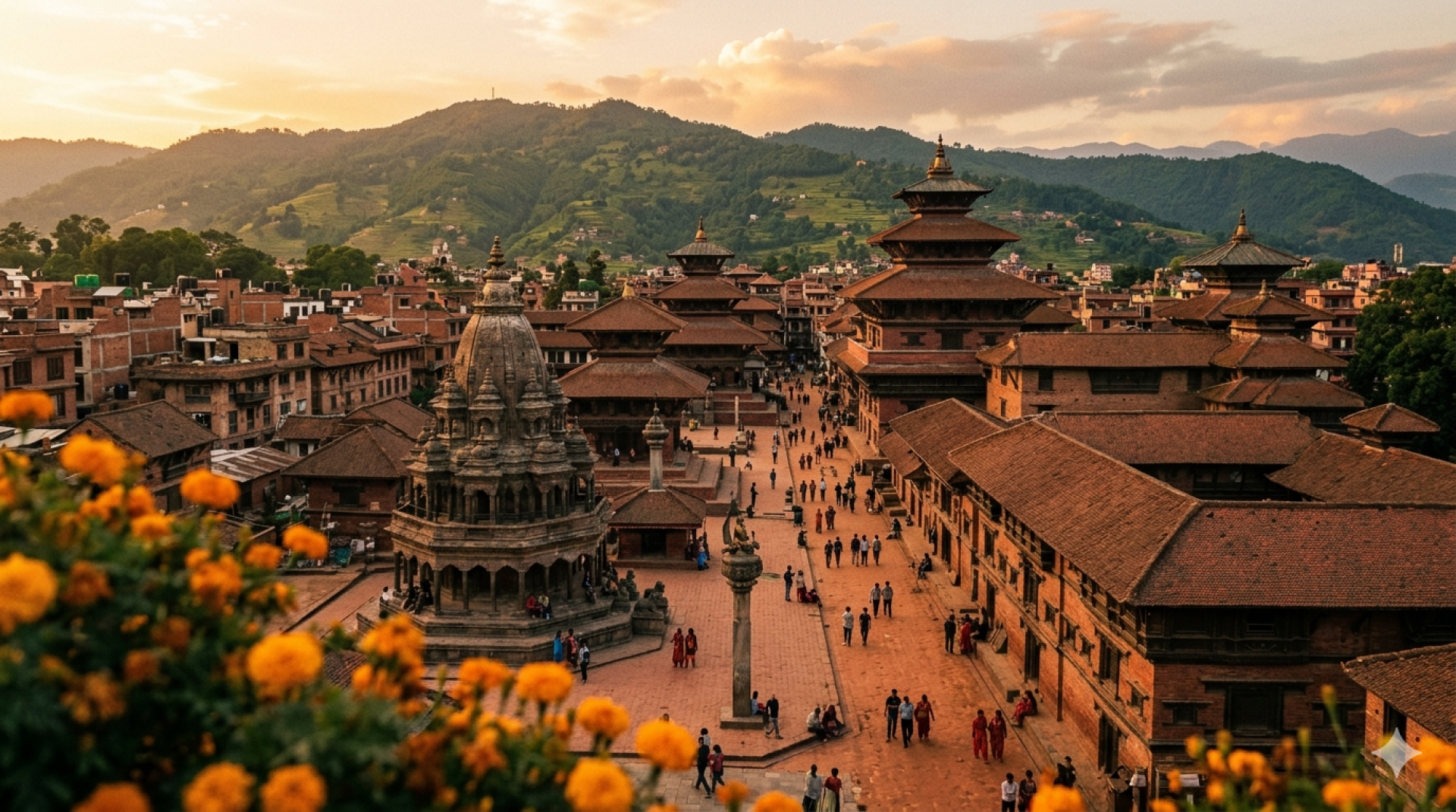
When people talk about property investment in the Kathmandu Valley, the conversation usually gravitates toward Lalitpur's modern corridors or Kathmandu's commercial spine. Bhaktapur — the ancient city of devotees — is often an afterthought. That is a significant analytical error.
Bhaktapur operates on a fundamentally different value engine. While other cities derive real estate worth primarily from commercial density and infrastructure, Bhaktapur's value is driven by something far harder to replicate: over 1,000 years of living culture, the world's highest concentration of medieval art per square kilometer, and an identity so unique it earns foreign exchange simply by existing.
For an investor with a long horizon, that is not just aesthetically pleasing — it is financially meaningful.
Bhaktapur is one of only three cities in the world where the ratio of temples to households exceeds 1:7. This density of sacred and architectural heritage creates a scarcity that no developer can manufacture elsewhere in Nepal.
02 — UNESCO FactorHow World Heritage Status Anchors Property Value
UNESCO World Heritage designation does more than attract visitors — it creates a permanent economic moat around the inscribed area. In cities across the world from Dubrovnik to Luang Prabang, UNESCO status has consistently been shown to raise surrounding property values, improve infrastructure investment, and attract sustained international funding.
Bhaktapur is no exception. The designation has directly resulted in:
- International conservation funding — German, Japanese, and European development agencies have poured millions into Bhaktapur's restoration, improving streetscapes, drainage, and public spaces at no cost to local property owners.
- Controlled development zones — Heritage buffer zones restrict high-density construction, which protects property character and prevents the kind of oversupply seen in outer Kathmandu.
- Tourism infrastructure investment — Roads, pedestrian pathways, lighting, and drainage in core areas are maintained to international visitor standards.
- Brand recognition — Bhaktapur's name carries global weight. A rental property here can command a tourism premium that a similarly-sized property in Bhaktapur's outskirts simply cannot.
Studies of comparable UNESCO heritage zones in Southeast Asia found that residential properties within 500 meters of a major inscribed monument appreciated 18–35% faster over a 15-year period than equivalent properties in non-heritage areas of the same city.
03 — Economic EngineTourism Income and Its Real Estate Ripple Effect
Bhaktapur generates foreign exchange through a mechanism most Nepali cities lack: a dedicated entry fee for foreign visitors. At $15 USD per foreign tourist, the Bhaktapur Municipality collects significant revenue that is reinvested directly into the heritage zone — improving the very infrastructure that makes properties in the city attractive.
This creates a virtuous cycle: better-maintained heritage attracts more visitors, more visitors justify continued investment in public spaces, and better public spaces increase property desirability. This flywheel is one of the most reliable long-term value drivers a real estate market can have.
What Tourism Means for Property Owners
The practical implications for real estate investors are concrete:
Hospitality Real Estate
Heritage homestays and boutique guesthouses in the core area can achieve occupancy rates of 60–75% with average daily rates well above Kathmandu's outer zones.
Commercial Frontage
Ground-floor commercial space along Durbar Square approaches and pottery squares commands a scarcity premium — supply is physically constrained by heritage law.
Residential Rental
Expat researchers, conservation volunteers, and long-stay tourists create a stable, higher-paying rental demand segment not found in purely residential Nepali cities.
Cultural Event Venues
Festival seasons — Bisket Jatra, Indra Jatra, and others — generate surges in short-term demand that property owners with the right format can monetize significantly.
04 — Architecture PremiumThe Newari Architecture Advantage
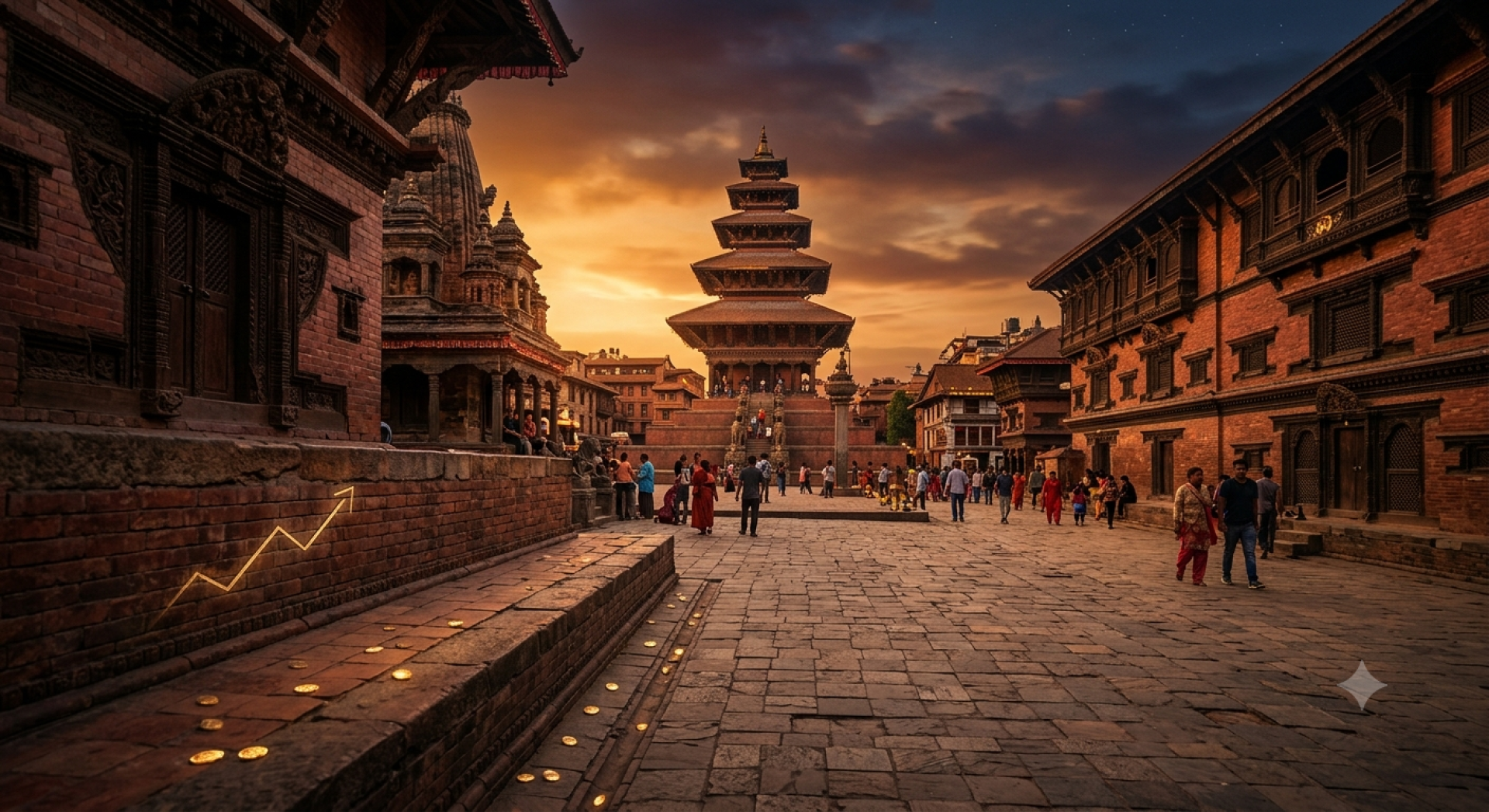
Newari architecture — characterized by multi-tiered pagodas, intricately carved wooden torana doorways, exposed brick facades, and recessed courtyards called "chowks" — is not simply beautiful. It is irreproducible at scale. The artisan knowledge required to authentically build or restore a Newari structure is held by a dwindling number of master craftspeople, many of them concentrated in Bhaktapur itself.
This irreproducibility creates a genuine supply constraint. Unlike glass-facade apartments that can be built anywhere by any contractor, authentic Newari structures are a finite asset whose craftsmanship value increases as the pool of skilled artisans contracts. A restored Newari courtyard home in Taumadhi Square is not competing with a modern apartment in Koteshwor — it occupies its own demand category.
A brick wall in Bhaktapur is not just a wall. It is five centuries of craft, faith, and community identity compressed into terracotta. You cannot pour that out of a concrete mixer.
— Conservation Architect, Bhaktapur Heritage ProgrammePost-Earthquake Restoration Premium
The 2015 Gorkha earthquake caused significant structural damage to parts of Bhaktapur, particularly around Taumadhi Square and Dattatreya. The subsequent internationally-funded restoration effort — led by Japanese, German, and European agencies — has resulted in structurally improved, earthquake-retrofitted heritage properties that now combine historic aesthetics with modern structural integrity. Properties that underwent certified restoration have seen outsized appreciation since 2018.
05 — Investment MapKey Investment Zones Within Bhaktapur
Not all of Bhaktapur offers the same investment profile. Understanding the city's distinct zones helps investors match their strategy to the right location.
Durbar Square & Taumadhi Tole
Highest foot traffic, maximum heritage density. Commercial and hospitality use cases dominate. Entry prices are highest but so is rental yield potential. Best for income-generating assets.
Pottery Square (Kumale Tole) & Tachapal
Living craft culture with active artisan workshops. Growing appeal among design tourism and cultural retail. Mid-range entry with growing discovery premium as arts tourism rises.
Sallaghari & Suryabinayak Corridor
Modern residential meets heritage-adjacent location. Strong infrastructure, proximity to Ring Road, suitable for conventional residential investment with heritage city spillover benefits.
Lokanthali & Thimi Outskirts
Lower land cost, improving connectivity, younger residential demographic. Longer appreciation horizon but entry points significantly more accessible for first-time investors.
06 — Historical ContextA Timeline of Heritage-Driven Value Creation
Understanding how Bhaktapur's heritage status translated into economic value over decades clarifies why this is a structural, not cyclical, advantage.
1979 — UNESCO Inscription
Bhaktapur Durbar Square inscribed as a UNESCO World Heritage Site. International attention and conservation funding begin flowing in. First wave of foreigner long-stay population arrives.
1989–2000 — German Development Project
The Bhaktapur Development Project (co-funded by German government) upgrades urban infrastructure — sewage, roads, brick paving, lighting. Property values in the core zone accelerate significantly over this period.
2001–2010 — Tourism Boom & Hospitality Growth
Rising international tourism fuels the first generation of boutique guesthouses and cultural hotels. Commercial ground-floor rents near Durbar Square double within a decade.
2015 — Earthquake Damage & Recovery
The Gorkha earthquake causes significant damage. International restoration effort begins — leading to a post-2017 recovery market where restored properties outperform un-restored peers by substantial margins.
2020–2026 — Digital Discovery & Slow Tourism
Post-COVID travel patterns shift toward immersive, slow-travel experiences. Bhaktapur's authentic cultural experience gains a new global audience, supporting hospitality and short-term rental demand.
07 — Market ComparisonBhaktapur vs. Kathmandu & Lalitpur
| Factor | Bhaktapur (Core) | Kathmandu (Prime) | Lalitpur |
|---|---|---|---|
| Value Driver | Heritage, tourism, scarcity | Commerce, density, jobs | Mix of both |
| Land Price (Approx.) | NPR 80L–1.5Cr/aana | NPR 1.5Cr–3Cr+/aana | NPR 1Cr–2.5Cr/aana |
| Rental Yield | 3.5–6% (tourism-linked) | 2.5–4% (residential) | 3–5% |
| Development Control | Heritage zone restrictions | Moderate zoning | Moderate zoning |
| Oversupply Risk | Very Low | Medium–High | Medium |
| 10-Year Appreciation Outlook | Stable-Strong | Moderate | Moderate-Good |
| Liquidity | Lower (niche market) | Higher | Medium |
Bhaktapur offers a lower entry point than prime Kathmandu with a structural protection against oversupply — a combination rarely available in the same market. The trade-off is liquidity: the buyer pool for heritage-zone properties is narrower, meaning exit timelines are longer.
08 — Risk AssessmentRisks and Regulatory Realities Investors Must Understand
Intellectual honesty demands addressing the constraints that come with Bhaktapur's heritage status. These are real and must be weighed carefully.
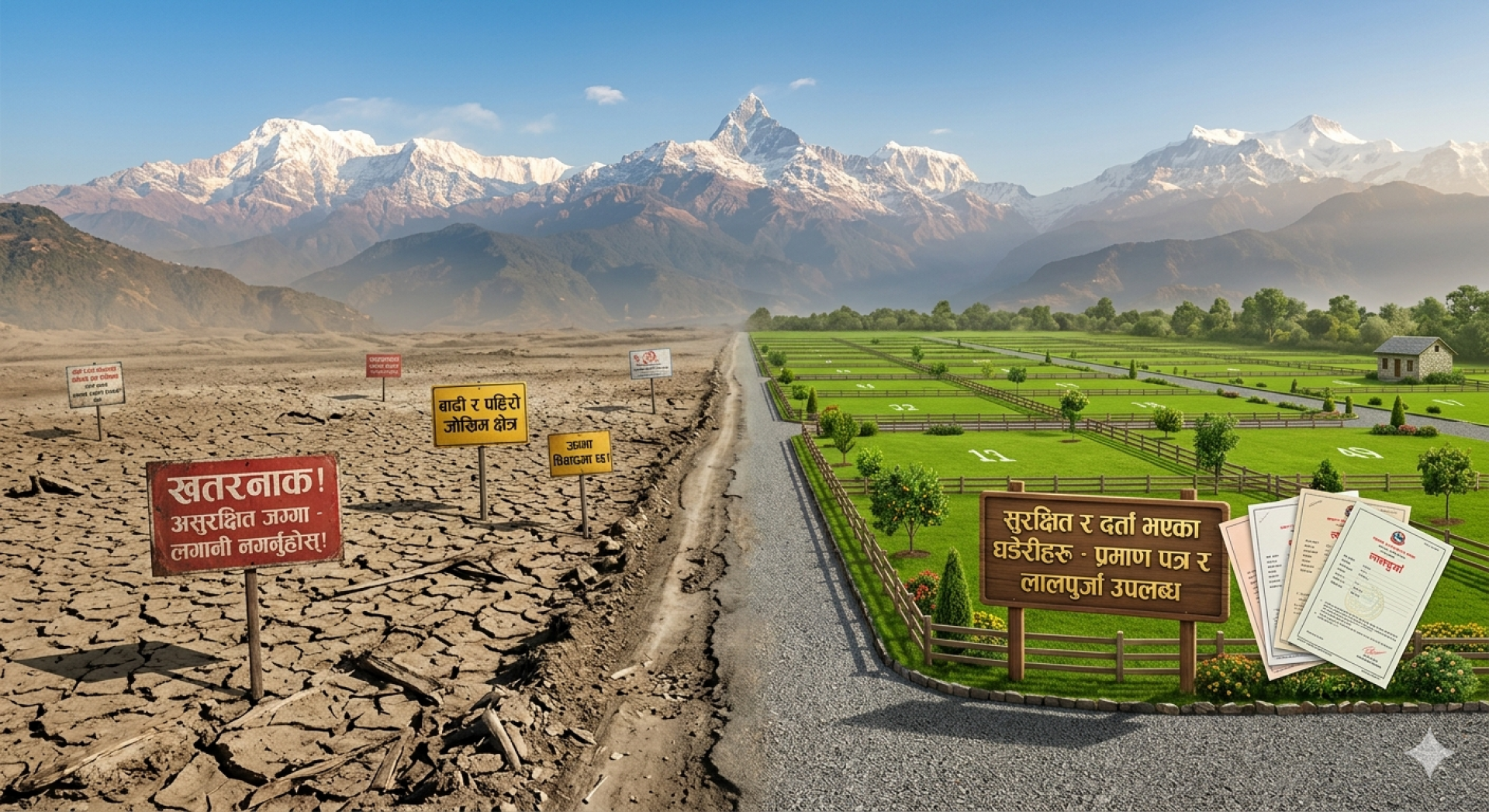
Heritage zone properties in Bhaktapur are subject to the Ancient Monument Preservation Act and Department of Archaeology guidelines. Renovations, additions, and changes of use may require government approval, which can add time and cost to development plans.
- Renovation restrictions: Façade changes, floor additions, and structural modifications in heritage buffer zones require DoA (Department of Archaeology) clearance. This is manageable but adds process overhead.
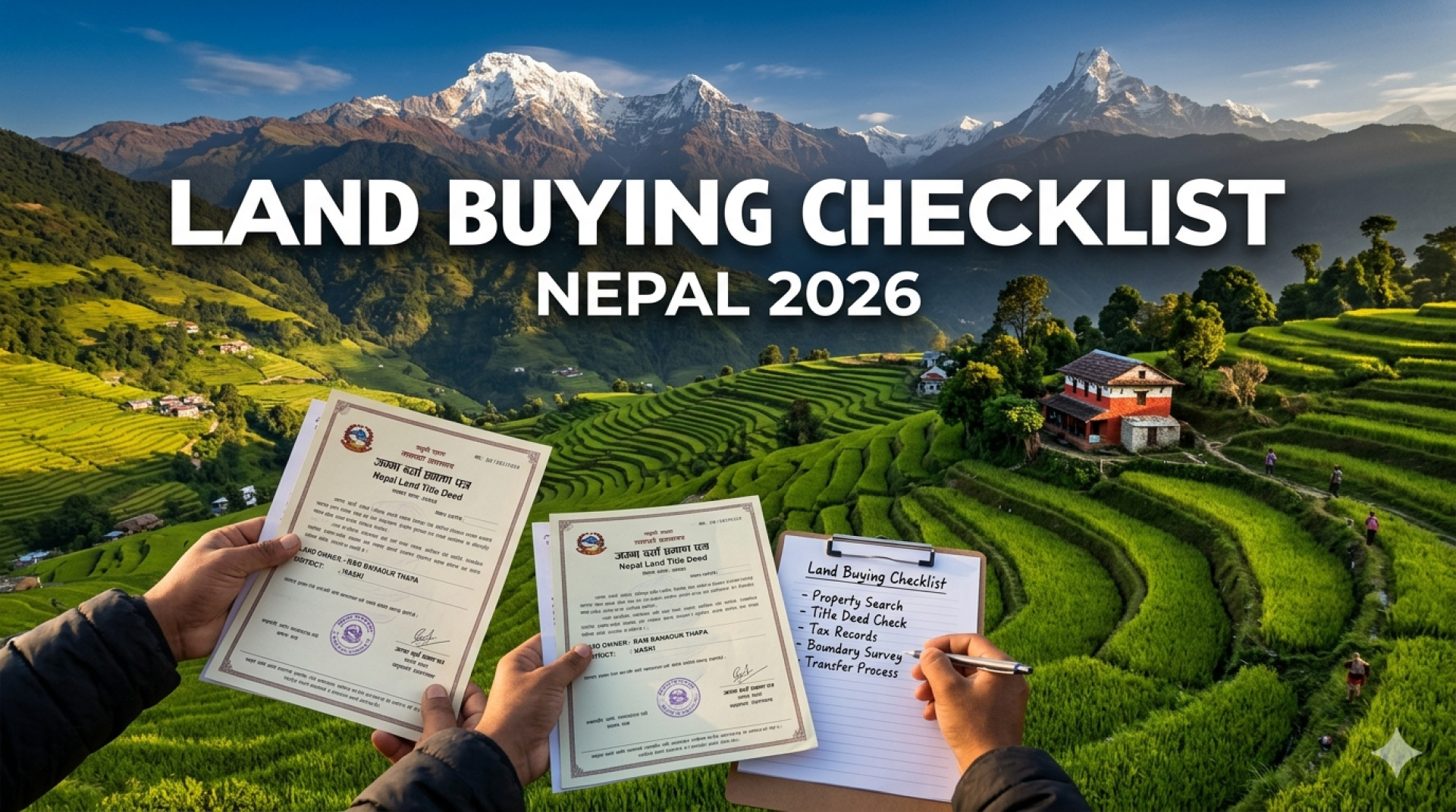
- Title complexity: Some parcels in the old city carry shared-lineage (guthi) land arrangements that require careful legal due diligence before purchase.
- Tourism seasonality: Hospitality income is concentrated in October–March. Investors depending on short-term rental income must plan for off-season vacancy.
- Earthquake risk: Bhaktapur sits in a high-seismic-activity zone. Structural certification of any property being purchased is non-negotiable due diligence.
- Narrow resale market: The buyer profile for a restored Newari courtyard home is specific. You will not find a buyer in two weeks. Plan for a 6–18 month exit window.
Despite these constraints, many investors find that the same regulations that slow development are precisely what protect the heritage premium. The restrictions are not a bug — for a long-term holder, they are a feature that prevents value dilution.
09 — Investor ProfileWho Should Consider Bhaktapur Real Estate?
Bhaktapur is not a market for every investor. It rewards a specific profile:
Patient Capital
Investors with a 7–15 year horizon who can afford to let heritage appreciation compound without needing a quick exit.
Informed Buyers
Those who invest in due diligence — title checks, structural assessment, DoA consultation — before committing. Heritage markets punish the uninformed.
Lifestyle Investors
Diaspora returnees, cultural entrepreneurs, and architects who want their investment to also be a heritage asset they are proud to own and steward.
Hospitality Operators
Those able to convert a property into a boutique guesthouse or cultural stay — turning heritage density directly into operating income.
10 — Final WordConclusion: Heritage Is Not a Sentiment, It's a Moat
In the language of investment strategy, a moat is a structural, durable competitive advantage that protects value over long periods. Bhaktapur's cultural heritage — its UNESCO status, its living Newari traditions, its architectural irreproducibility, and its international recognition — constitutes one of the most genuine moats any real estate market in Nepal can claim.
Other cities can build more apartments, widen more roads, and attract more commercial tenants. No city in Nepal can manufacture another Bhaktapur. That irreproducibility is the foundation of a real estate thesis that has compounded for decades and shows no structural signs of reversal.
For investors willing to navigate heritage zone regulations, conduct rigorous due diligence, and hold assets over meaningful timeframes, Bhaktapur offers something that no balance sheet can fully capture: a city where the history literally embedded in the bricks is the asset — and that asset is only getting rarer with time.