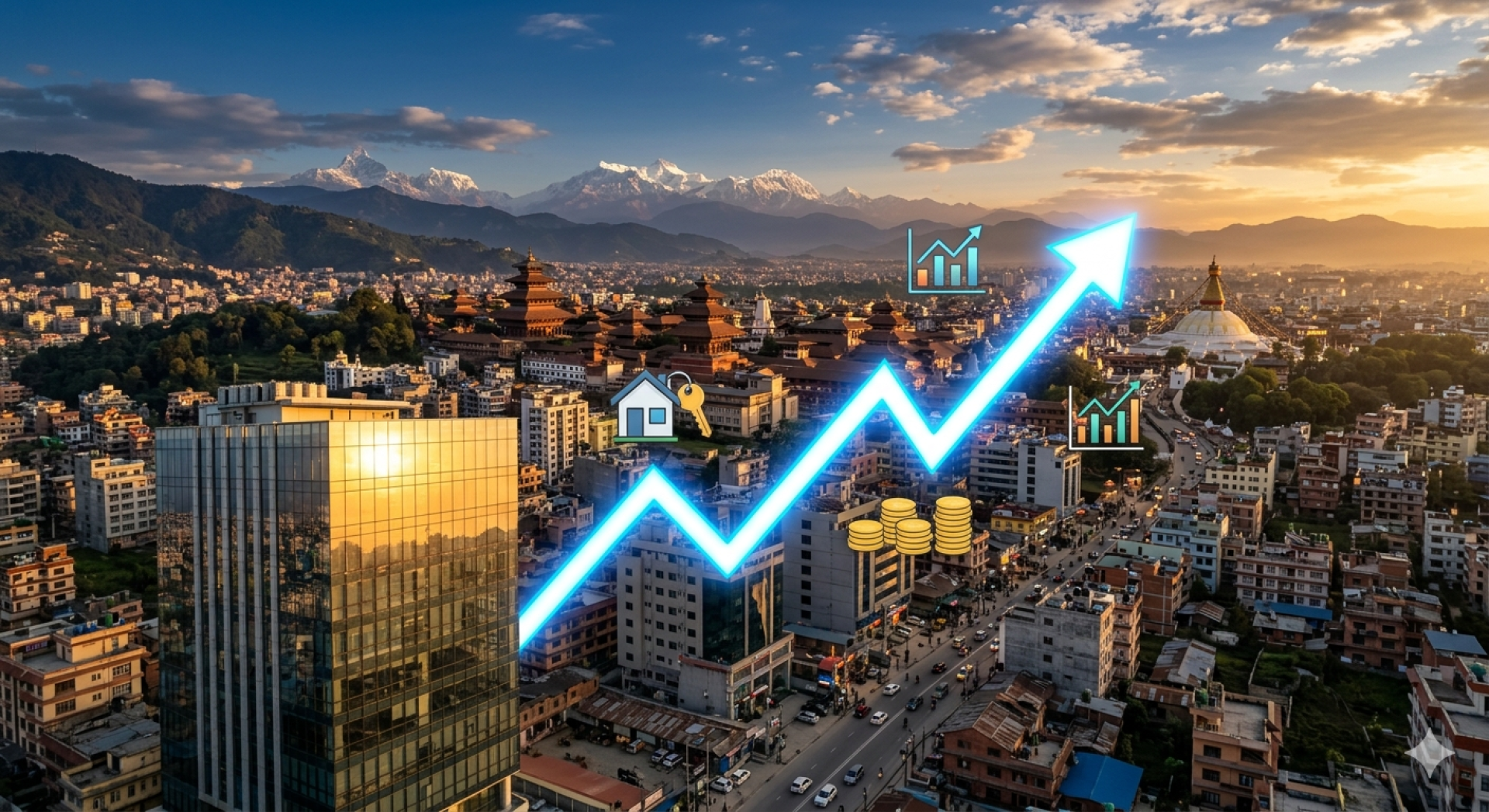
Bhaktapur — the "City of Devotees" — is not just one of Nepal's finest UNESCO World Heritage Sites. In 2026, it has quietly emerged as one of the most compelling land investment destinations in the Kathmandu Valley. Sandwiched between rapid infrastructure growth and a globally recognized cultural identity, the question many investors and families are now asking is: should I buy land here?
This guide unpacks the market data, growth patterns, legal framework, and strategic insights you need to make a fully informed decision — whether you're a first-time buyer, a seasoned investor, or a member of the Nepali diaspora looking to invest back home.
Why Bhaktapur? An Overview
Bhaktapur, the easternmost city of the Kathmandu Valley, is governed as its own municipality with a distinct administrative identity from Kathmandu Metropolitan City. This separation has historically allowed Bhaktapur to preserve its town planning, cultural architecture, and community-led urban governance — a rare trait in rapidly developing South Asia.
In recent years, the city has seen a surge of interest from investors who previously focused only on Kathmandu and Lalitpur. Several factors are behind this shift:
- 🏛️ UNESCO Heritage Value: The Bhaktapur Durbar Square area and surrounding temples attract over 300,000 tourists annually, sustaining a robust hospitality and rental market.
- 🛣️ Improved Connectivity: The widening of the Araniko Highway and Bhaktapur-Banepa road corridor has cut commute times significantly.
- 🏫 Education Hub Growth: Multiple colleges and technical schools have established campuses in outer Bhaktapur wards, driving rental demand.
- 🌱 Greener Land Options: Compared to inner Kathmandu, Bhaktapur still offers larger plot sizes at relatively lower per-anna rates, especially in outer wards like Suryabinayak and Sipadol.
- 🏗️ Post-Earthquake Reconstruction: The 2015 earthquake recovery led to systematic urban planning in several zones, making newer plots legally cleaner and more structured.
Bhaktapur District covers an area of approximately 119 sq. km and has a population of around 330,000. Its urban density is significantly lower than Kathmandu, making it attractive for those seeking affordable land with long-term appreciation.
Current Land Market in 2026
The Nepali real estate market in 2026 presents a nuanced picture. After a period of correction in 2022–2023 driven by high interest rates and post-COVID liquidity constraints, land prices across the Kathmandu Valley have stabilized and are now showing a moderate upward trend.
Price momentum is strongest in wards that border major road arteries and those within 2–3 km of Bhaktapur Municipality's core commercial belt. The Suryabinayak corridor — connecting Bhaktapur to Banepa and the Araniko Highway — has emerged as the fastest-growing micro-market.
| Area / Ward | Price per Anna (NPR) | 2-Year Growth | Demand Level |
|---|---|---|---|
| Durbar Square Core | 25L – 35L | +8% | Moderate |
| Suryabinayak | 10L – 16L | +18% | High |
| Sipadol / Lokanthali | 8L – 13L | +14% | High |
| Nagarkot Fringe | 4L – 8L | +10% | Growing |
| Madhyapur Thimi | 12L – 18L | +13% | High |
Top Investment Hotspots in Bhaktapur (2026)
1. Suryabinayak Corridor
This area has transformed dramatically over the last four years. With multiple hospitals, schools, and shopping complexes now established, Suryabinayak plots in the 8–15 anna range represent an excellent entry point for medium-term investors. Proximity to the Araniko Highway provides easy access to both Kathmandu (40 min) and Banepa (15 min).
2. Sipadol–Lokanthali Zone
Bordering Lalitpur and Kathmandu, this strip has become a favored residential destination for young professionals and double-income families. Rental demand is high, and land here qualifies for residential to commercial mixed-use zoning in several sub-areas.
3. Madhyapur Thimi
Technically a separate municipality within Bhaktapur District, Thimi is famous for its pottery industry and is increasingly popular for boutique homestay investments. The government's rural tourism push has improved road networks here, and land prices have responded accordingly.
4. Nagarkot Fringe
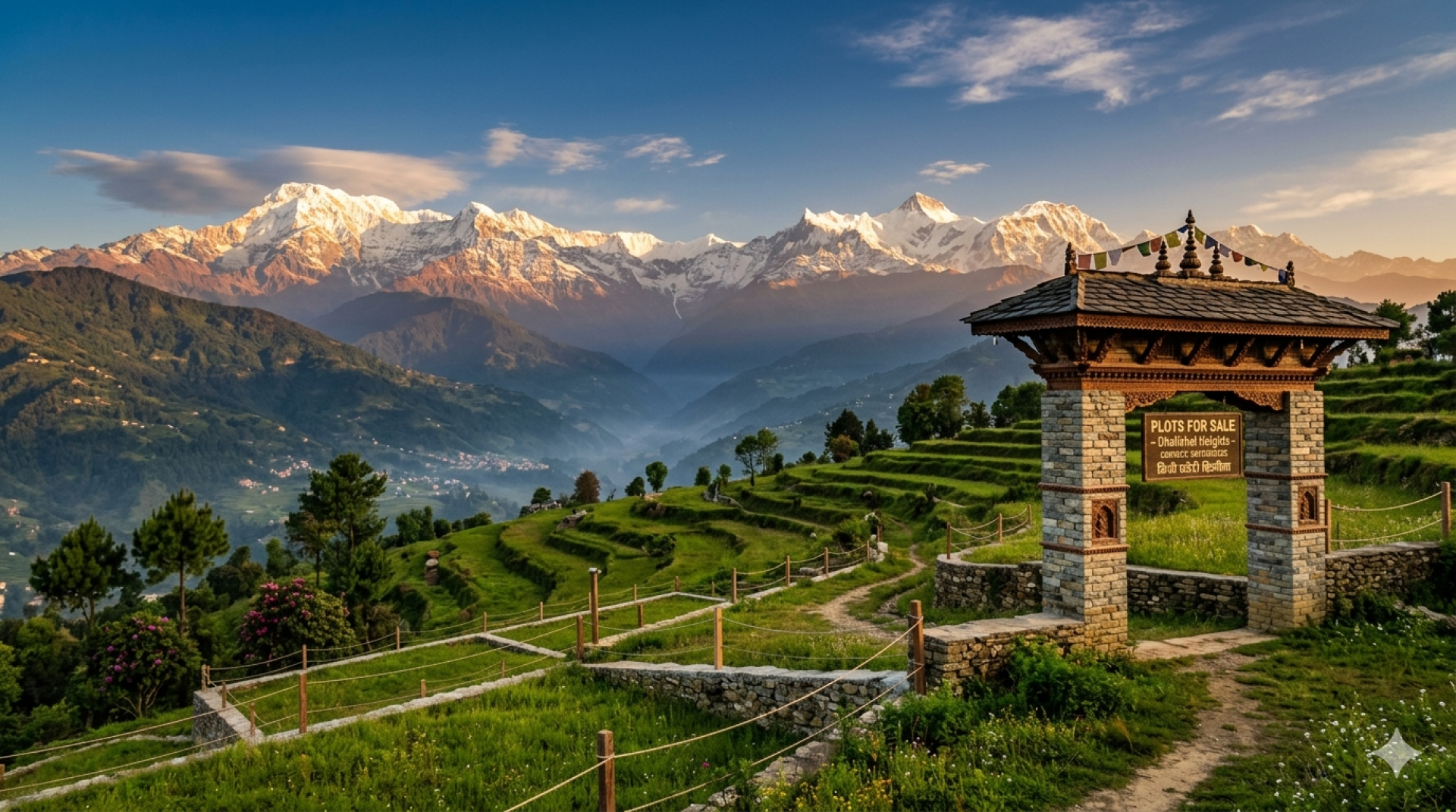
The least dense and most affordable of the zones, Nagarkot fringe land is ideal for eco-tourism or long-horizon investors (10+ years). With Nepal's tourism sector recovering strongly post-pandemic and hill-station real estate gaining global attention, this area holds serious long-term potential.
For investors in the NPR 50–80 lakh budget range in 2026, Suryabinayak (4–6 anna plots) offers the best balance of affordability, appreciation potential, and rental yield. Development infrastructure is already in place, reducing risk significantly.
ROI & Rental Yield Analysis
Return on investment in Bhaktapur land depends heavily on your use case: Are you buying to hold and appreciate? To build rental housing? To develop a commercial or hospitality property? Each scenario carries different yield profiles.
Scenario A: Buy & Hold (Capital Appreciation)
Based on 2020–2026 data, strategic plots in Suryabinayak and Thimi have delivered compound annual growth of 10–14%. Assuming a similar trajectory over the next five years, an investment of NPR 60 lakhs today could reasonably value at NPR 95–110 lakhs by 2031 — a 58–83% return before transaction costs.
Scenario B: Rental Housing Development
Building a 3–4 floor residential building (4–6 units) in a well-located ward can generate monthly rental income between NPR 40,000–80,000, depending on unit quality and location. With construction costs averaging NPR 3,500–4,500 per sq. ft., a full investment (land + construction) of NPR 1.2–1.8 crore can yield a 6–8% annual rental return — comparable to or better than most fixed deposit rates in Nepal.
Scenario C: Tourism / Homestay Investment
Bhaktapur's cultural appeal makes it ideal for boutique homestays and guesthouses. Nepal Tourism Board data suggests occupancy rates at Bhaktapur heritage-zone accommodations averaged 68% in 2025 — among the highest in the Valley. A well-designed 6-room heritage homestay can generate NPR 5–10 lakhs monthly during peak season (Oct–Dec, Feb–Apr).
Pros & Cons at a Glance
✅ Pros of Buying Land in Bhaktapur
- Strong cultural identity drives perpetual tourism demand
- Lower land prices vs. Kathmandu & Lalitpur core
- Improving road infrastructure and connectivity
- Growing education and healthcare sector = rental demand
- Government investment in heritage restoration
- Cleaner urban planning in outer wards post-2015
- Favorable for diaspora buyers (remittance-linked purchases)
⚠️ Cons & Risks to Consider
- Heritage zone restrictions limit commercial development
- Some plots still have unresolved ownership disputes
- High stamp duty and transaction costs (~5–6%)
- Infrastructure gaps in peripheral wards
- Political uncertainty can affect liquidity
- Limited high-rise development due to municipal bylaws
Legal Considerations Before You Buy
Real estate law in Nepal is governed primarily by the Land Act 2021 (2nd Amendment), Civil Code 2017, and local municipality building bylaws. Before purchasing land in Bhaktapur, ensure the following due diligence steps are completed:
- 📄 Land Ownership Certificate (Lalpurja): Verify the original with the Land Revenue Office (Malpot) in Bhaktapur. The seller must present the valid current Lalpurja.
- 📐 Field Measurement (Napi): Request a field measurement from the Survey Department to confirm actual plot boundaries versus registered dimensions.
- 🏛️ Heritage Zone Check: Bhaktapur Municipality designates certain zones as heritage-restricted. Confirm whether your plot falls within this boundary — construction type, height, and facade are often regulated.
- ⚖️ Litigation Check: Verify there are no pending court cases (Dhara Bitta) on the land at the District Court.
- 🔍 Four-Boundary Clearance: Ensure all four boundary neighbors acknowledge and agree to the existing Napi map. Disputes here are the most common source of post-purchase issues in Nepal.
- 💳 Tax Clearance: The seller must provide evidence of all land taxes paid up to date (Mal Masu Chuktaa).
Foreign nationals (non-NRN) cannot purchase land in Nepal. NRN (Non-Resident Nepali) cardholders may invest under the NRN Act 2064, with specific conditions. Always engage a registered land lawyer (Wakil) before executing any agreement, especially for plots exceeding NPR 50 lakhs in value.
Smart Buying Tips for 2026
- Hire a local agent AND a lawyer separately. Agents work for commissions and are not legally responsible for document accuracy. A registered advocate provides legal protection.
- Visit the site at different times of day. Check flooding risk during monsoon months (June–August). Bhaktapur's eastern zones have clay-heavy soil that can retain water.
- Negotiate for road access certification. Plots without direct road access (Bato Bhayo Bhanna Parne) are nearly impossible to resell and often unfinanceable by banks.
- Prioritize corner plots and road-facing land. These command a 15–25% premium at resale, and banks value them higher for mortgage collateral.
- Use bank valuation as a benchmark. Before finalizing price, request a government or bank valuation (Lagan Mulya). Never pay more than 130% of bank valuation without clear justification.
- Time your purchase strategically. The January–March window typically sees lower seller expectations due to reduced market activity post-Dashain. Monsoon months (July–August) can also offer negotiating leverage.
Final Verdict: Is It Worth It?
The short answer: Yes — with the right plot, in the right zone, and with proper due diligence.
Bhaktapur is not a speculative bubble play. It is a market driven by genuine fundamentals: cultural heritage, growing urbanization, infrastructure investment, and Nepal's recovering tourism economy. For long-horizon investors (5+ years), land in Bhaktapur's growth corridors — particularly Suryabinayak, Thimi, and Sipadol — represents a solid, inflation-resistant asset.
For residential buyers, Bhaktapur offers what Kathmandu increasingly cannot: livable land at accessible prices, in a city with identity, culture, and community. That combination, in a world where urban authenticity is increasingly rare, has its own kind of value.
If you have a budget of NPR 50 lakhs to 1.5 crore, a 3–5 year investment horizon, and the patience for proper legal due diligence, Bhaktapur land in 2026 is one of the more compelling opportunities in the Kathmandu Valley real estate market. Focus on outer wards with infrastructure, verified documents, and road access.